The referee inherits a wargame
The role came out of umpiring, where somebody adjudicated what the rules did not cover.
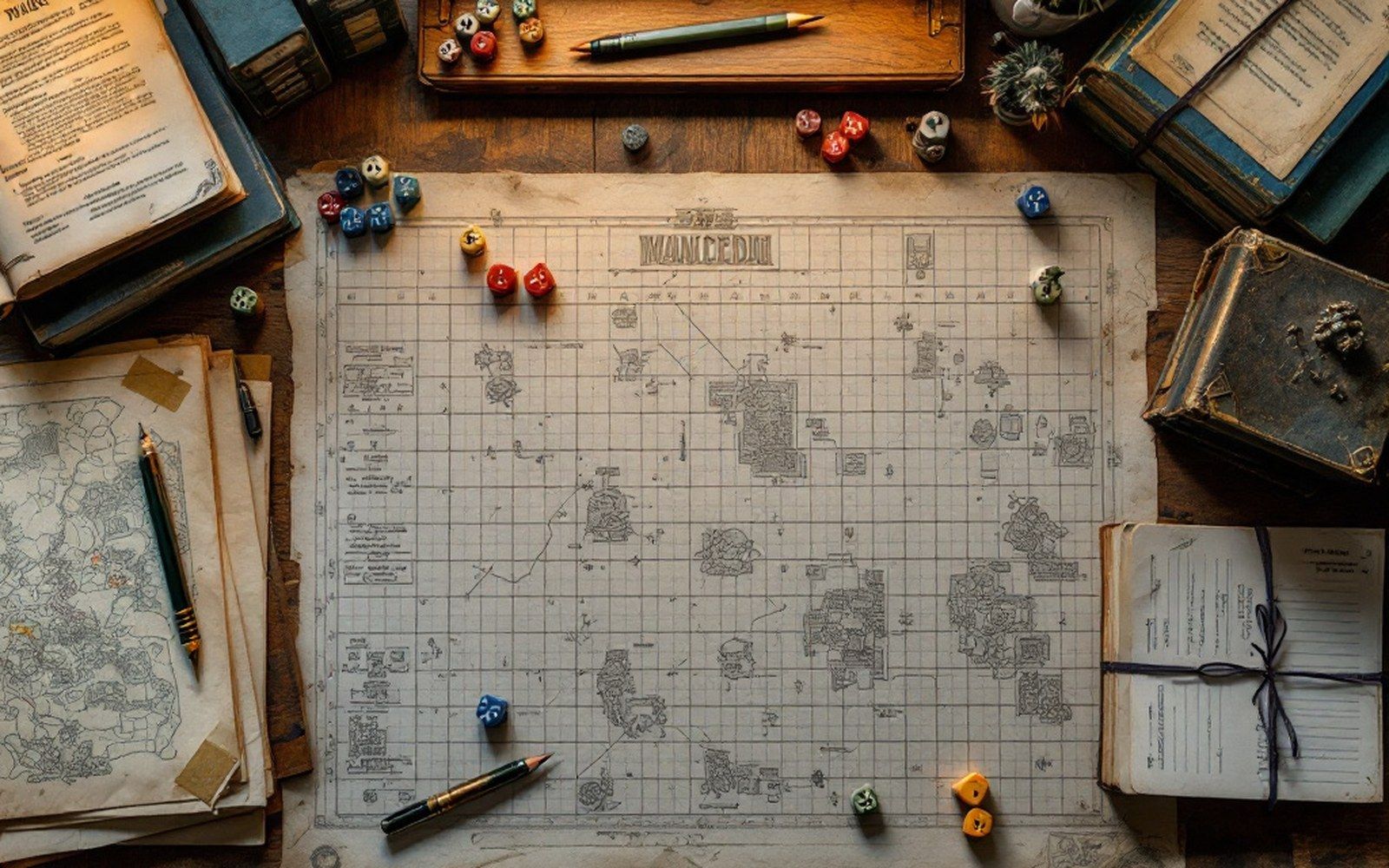
The role has a job description older than the hobby — and that job was never about storytelling.
From umpire to referee
Before there was a referee there was an umpire, and before the umpire there was a gap in the rules. Miniature wargaming in the mid-twentieth century inherited the Kriegsspiel tradition from nineteenth-century Prussian military training: a referee sat between the two sides, resolving situations the rulebook had not anticipated and adjudicating outcomes that fell outside the dice's reach. The rules covered what the designer had imagined; the umpire covered everything else. That division — written rule versus human judgment — is the founding architecture of the referee role.
When Dave Arneson ran the Blackmoor campaign in Minneapolis in the early 1970s, he carried that umpire function directly into something new. Players were no longer commanding armies; they were controlling single characters moving through a fictional space. But the structural position of the person running the game remained recognisably the same. One person held the map, adjudicated contact with the fictional world, and filled the silences between the written procedures. Gary Gygax, formalising this in Dungeons & Dragons from Lake Geneva, Wisconsin in 1974, named this role the referee in the original text — a term borrowed straight from the wargaming table.
What the role was actually built to do
The job was not narration. It was adjudication — specifically, the adjudication of edge cases. A wargame referee decides what happens when a unit attempts something the ruleset does not model, when terrain creates an ambiguity, when a player's intended action falls between the defined categories. That is a procedural function, not a creative one, and the earliest dungeon-crawling rules inherited it intact. The referee tracked resources, called for rolls, applied results, and filled the gaps. The fictional world existed as a setting for those procedures, not as a story to be authored.
This is why the question of who gets to say it happened is already implicit in the role's design: the referee's authority is the wargame's residual authority, the power that exists because no rulebook can enumerate every situation. It is not granted by the fiction; it is granted by the absence of a rule. That origin shapes everything that comes after. When later designers pushed back against referee authority — distributing it across the table, encoding it in player-facing moves, anchoring it in explicit fictional triggers — they were pushing back against a specific inheritance, not against some natural law of the form.
The gap the umpire was built to fill
The important design insight is that the gap itself is not a flaw. Every resolution system leaves white space: what the dice are actually doing is probability arithmetic on a narrow slice of reality, and the fictional situation is always richer than the procedure. Somebody has to speak to that excess. The wargame answer was to institutionalise a human being in that role and trust their judgment. The OSR argument, as a design position, is largely a defence of that trust — a claim that the flexibility and responsiveness of a skilled referee outperforms any attempt to write rules that close the gaps in advance.
The alternative argument — made forcefully by games in the Apocalypse World lineage — is that unencoded authority is invisible authority, and invisible authority is unaccountable. If the referee's job is to fill the silence between the rules, that job is also the job of deciding which silences exist and which players' actions fall into them. That is not a neutral function. Encoding the referee's moves as explicit procedures, even partial ones, makes the distribution of authority legible. It does not remove the gap; it changes who is licensed to speak into it.
Neither position resolves the original problem. Every table still has a gap between the rule and the situation, and someone still fills it. What design history since 1974 has actually produced is a long argument about whether that someone should be a trusted umpire, a set of written triggers, or a shared negotiation — and about which of those arrangements best serves the kind of play the game is trying to produce. The referee inherited a wargame. What designers inherited was the question of what to do with that.
Read next
More in Who gets to say it happened? · the full index